Last night I found one of those insects some call a “daddy long legs” and some call a “mosquito eater” in my bathroom. I hadn’t seen one for years, and it was a welcome sight reminding me of long ago stays in woodsy cabins that were not well-sealed from the outdoors. But for a number of reasons, I thought it would be best if its visit to the bright small room was brief. I was sure to leave the door wide open and the alluring light fixture off, hoping it would find its way to a spot near a door where we could let it outside. Later, I didn’t see it in the bathroom and imagined it was on its way.
But in the morning, I found it, by the window—in a corner that wouldn’t allow for me to catch it in a yogurt container and take it outside. On a closer look, I realized there was a half-peanut-sized ball of spider web stuck to the tip of one of its back legs. I wondered if the weight of that web could keep an insect from moving.
Since the insect was so still, I tried giving the web ball a tug. But the long spindly leg just pulled out straight, well-stuck to the web. The insect was clearly alive, and I was surprised my tug didn’t get it at least trying to fly away. Now I was in full problem-solving mode. I got scissors, thinking I might cut off most of the web and at least lighten its load. Kudos to the spiders, because web is apparently right there with rock, beating scissors. The scissors didn’t slice the web, but the experience got the insect moving, which I was glad to see. It took a short flight to the shower curtain. Now I could get the yogurt container, thinking that if this creature was going to live out its life burdened by a knob of web, at least it could do so outside.
I got the insect into the container easily, put on the lid to keep it there, walked down the hall, and opened the front door. When I looked down at the lid I was about to remove, a half-peanut-sized ball of spider web caught my eye. Could that be the same web, perfectly situated on the edge of the lid, with the insect inside? Probably another piece of debris, I thought, but I pulled it off with a small tug. Then I opened the lid. A blur zipped to the loquat tree by my front porch.
I looked and saw the now familiar insect, with six long web-free legs, sitting on the leaves of the loquat tree.
Photo of the same loquat tree, taken soon *after* the insect had flown away.
I was quite taken with them and later wrote the persona poem below. (In persona poems, poets write from the point of view of someone or something other than themselves.) Though it didn’t make it into the poem, I think of that bright red leaf on the right as a heart.
Bay Couple
we reside alongside the wide path where we hear talk of the narrow paths above with city and bay views, bay like our name, but we are solid, only the sharp smells of our leaves flow unlike that other bay that we understand to flow with vast amounts of water, the rain stuff
many pass us by on the wide path jackrabbits, coyotes, mule deer, turkeys, garter snakes, foxes, the occasional mountain lion, hawks and vultures, high above, the small flittering birds, who land lightly on our branches to rest or build nests in our bends and grow their young
mostly in the light hours humans travel the wide path too, all sorts of humans, in their bright coverings, some speeding by on objects called bicycles, some walking singly or in packs of all sizes
and sometimes a couple of them stop nearby they speak in tones, low as a far wind, then quiet like the time after the owls and before the crows and tangle their limbs together in close connection, called a hug
but few stop to notice that I have tangled my limbs with older bay, over these many years, older bay, who once leaned into another bay, now long gone, in this time, these days, these seasons we two intertwine our twigs, rooted here, alongside of the wide path
Find links to more poetry for Poetry Friday at Tricia Stohr-Hunt’s The Miss Rumphius Effect blog where she writes about pantoum poems, shares one herself, and has links to those by others in her group—plus many links to other poems. I love pantoums, and though I’m not sharing one here, it strikes me that my bay friends’ tangled limbs are reminiscent of pantoum stanza’s tangled lines.
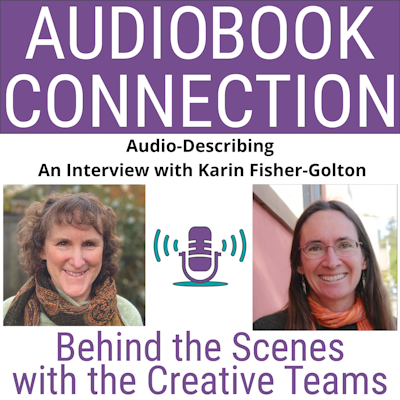
Last week I had the opportunity to speak with Becky Parker Geist, owner of Pro Audio Voices, on her Audiobook Connection podcast. We spoke about the benefits of both illustrations in picture books and sound effects in audio books for developing children’s reading and analytical skills; my experience creating a script to make picture book illustrations accessible to visually impaired children in a project we worked on together a couple years ago; what I do as a children’s book editor; and more.
Becky was a great interviewer. I was pleased by how comfortable I felt in this new-to-me setting. You can access the podcast by clicking the link below.
Happy Multicultural Children’s Book Day! I hope you are discovering a multitude of books that allow children to see themselves and others in the diversity of this world—today and always!
This year I was delighted that North-South Books sent me a review copy of their forthcoming book Rumi: Poet of Joy and Love, written and illustrated by the prolific Rashin Kheiriyeh. This picture book biography of the great Persian mystic and poet Rumi, who lived from 1207–1273, has a publication date of March 5, 2024.
I found my way to translations of Rumi’s poems as a young adult. Though his work was written about 800 years ago in a culture and language different from my own, I’ve been struck by how often his poems deeply resonate with me. What a wonderful confirmation of the consistency of human emotion and intellect across time and cultures. Children reading about Rumi will not only get to be introduced to this important poet, but also be reminded of how very long humans have been doing, thinking, and feeling human things.
Rumi: Poet of Joy and Love by Rashin Kheiriyeh, cover image
The first thing you will notice when you hold this book in your hands is its utter beauty. The text appears in shiny gold foil, and the cover art bursts with color. In the center, young Rumi appears in the clothing of a Sufi Sama dancer. Kheiriyeh has managed to create cover art that embodies the depth and liveliness of Rumi’s writing and its connection to both nature and spirit. This visual beauty continues throughout the richly illustrated text.
Kheiryeh’s use of language, with vivid and sometimes poetic descriptions like “born on a crisp and colorful autumn day in Iran” and “he danced like a floating leaf,” and her thematic references to the sun match her illustrations in giving the sense that the world through Rumi’s eyes had an intensity that made its way into his poetry. Teachers can use the text to discuss poetic elements and make those connections.
Rumi: Poet of Joy and Love by Rashin Kheiriyeh, interior illustration, cropped
Kheiriyeh deftly makes 13th-century Persia accessible to today’s children. Her focus includes the caring support of family, Rumi’s relationship to nature, his curiosity about the world, and expanding his understanding through stories. Later, he meets a teacher who becomes a friend. The loss of this teacher reveals his compassion and eventually leads him to his own writing path, for which we can all be grateful.
In an author’s note, readers learn that Kheiryeh grew up with Rumi’s books in Iran, and what his writing means to her. The back matter also includes a selected bibliography and more historical and cultural information. Here, readers who don’t already know can learn that that in addition to being a poet, Rumi was also an Islamic teacher and a Sufi mystic. They can also learn more about Sama, a ritual dance depicted in the text to thank God.
What a gift for children to be introduced to Rumi at such a young age—and to know that today people still remember and are inspired by this 13th-century poet.
I imagine many in the Poetry Friday crowd will love knowing about this book, so I am sharing my review at this week’s Poetry Friday round-up on Susan Thomsen’s blog, Chicken Spaghetti. Check it out to delve into more poetry. I’ll mention here that I had hoped to include some poetry by Rumi in this post. I discovered that finding a poem that was both child-accessible and could be shared in a way that would respect the translator’s intellectual property defied my internet searching efforts. To direct teachers and others interested to a few sources: Kheriyeh’s selected bibliography cites the poetry collection, The Essential Rumi by Coleman Barks. In my searching, I was also intrigued by the 2022 collection, Gold by Haleh Liza Gafori.
Multicultural Children’s Book Day 2024 (1/25/24) is in its 11th year! Valarie Budayr and Mia Wenjen founded this non-profit children’s literacy initiative; they are two diverse book-loving moms who saw a need to shine the spotlight on all of the multicultural diverse books and authors on the market while also working to get those books into the hands of young readers and educators.
Read Your World’s mission is to raise awareness of the need to include kids’ books celebrating diversity in homes and school bookshelves. Read about our Mission and history HERE.
Read Your World celebrates Multicultural Children’s Book Day and is honored to be Supported by these Medallion and Ruby Sponsors!
Join us on Thursday, January 25, 2024, at 9 pm EST celebrating more than 10 years of Multicultural Children’s Book Day Read Your World Virtual Party! Register here.
This epically fun and fast-paced hour includes multicultural book discussions, addressing timely issues, diverse book recommendations, & reading ideas.
We will be giving away a 10-Book Bundle during the virtual party plus Bonus Prizes as well! *** US and Global participants welcome. ***
Follow the hashtag #ReadYourWorld to join the conversation, and connect with like-minded parts, authors, publishers, educators, organizations, and librarians. We look forward to seeing you all on January 25, 2024, at our virtual party!
My dear father, Stephen Fisher, passed away unexpectedly at the end of September last year. That event is now one of the markers in my life, with a before and an after. I want to mark it here with some creativity because he inspired creativity in me.
My father had a serious interest in photography that lasted for more than seven decades. From him, I learned about noticing details like light, reflections, and patterns of shape and color. I also learned about the importance of honing the use of one’s tools to express an artistic vision.
At the time he passed away, my poetry group was about to start a month-long project experimenting with taking photos and then writing ekphrastic poems based on them. (An ekphrastic poem is inspired by a piece of visual art.) It seemed like it would be a perfect way to begin to process my loss and honor my father at the same time. It seemed that way in theory, but in reality my capacity for creativity—both due to tasks and emotional energy—was very limited at that time.
One day in the middle of that month, I was visiting his grave. A scene caught my eye, and I took some photos. One (shown below) struck me as a photo that he would particularly like. Later I realized it was perfect for the poetry group project.
The geese and the whole scene brought to mind Mary Oliver’s well-known poem “Wild Geese.” I decided to experiment with writing not just an ekphrastic poem, but also a golden shovel based on two lines from Oliver’s poem. (A golden shovel is a type of poem created by the poet Terrance Hayes in honor of the poet Gwendolyn Brooks. The ending words of each line of the golden shovel poem, when read down the right side of the poem, make one or more lines of an existing poem—in this case “Wild Geese.”)
My resulting poem and photo are an interweaving of inspiration, poetry, photography, my father, and me. And a fitting way to honor and remember him here. It was the only poem I wrote that month. I’m grateful I had an assignment of sorts to move me toward sitting down and writing a poem at that time.
Illusions of Infinity a golden shovel after Mary Oliver’s “Wild Geese”
Settled into grass, rectangular grave markers tell stories. A flock of geese, honking, “me! me! me!” landed, strutted, and now stand about, act as feathered distractions from despair, Geese, grass, mourners, trees—this place is yours, for landing, growing, resting, connecting, and being. Taken by the gray pattern of birds and trunks, I frame a photo, “Don’t show the tree’s tops, and they will seem to reach to infinity,” my father would tell me. The wind whispers through the leaves, “you, you, you.” I take a picture that is mine wishing I could see what yours would be. Meanwhile markers, geese, and tree trunks dot the grass, here, in this spot within the wide world, where a flock lands and a flock goes and trees are up, under, and on.
The epilogue to this poem’s story is that one day, at the end of that month, I read the poem aloud at the cemetery. As I started to read, I noticed that the geese weren’t there, but in the middle of my reading, I heard them honking in the sky.
I’m glad to get to share about this experience with poets, among others, on Poetry Friday. I encourage any of you, poets or not, to visit Robyn Hood Black’s Life on the Deckle Edge blog for more Friday poetry and to enjoy her own post on the cozy, lovely aspects of a cup of tea.
We’re nearing the end of National Poetry Month—just a few days left and they are weekend days. It’s a perfect time to revisit a favorite poem, read some new ones by a poet whose work you want to spend more time with, or write a poem that’s been niggling at your thoughts or spirit.
We’re also nearing the end of the 2023 Progressive Poem. Irene Latham began the Kidlitsophere (world of children’s literature blogs) progressive poem tradition in 2012 “as a way to celebrate National Poetry Month (April) as a community of writers.” A different blogger/poet hosts the progressive poem each day in April and adds a line to a group poem. Irene headed up the project from 2012 to 2019 (archive here). And Margaret Simon took over the organizer role in 2020 (see that poem and links to later ones here). Thank you, Irene! Thank you, Margaret! And thank you to all the poet participators!
This is my second year participating in the Progressive Poem. Below is this year’s poem, so far, with my line at the end in italics. It’s followed by some thoughts on my process and the names of the other poets with links to their blogs.
Suddenly everything fell into place like raindrops hitting soil and sinking in.
When morning first poked me, I’d wished it away my mind in the mist, muddled, confused.
Was this a dream or reality, rousing my response? The sun surged, urging me to join in its rising,
Rising like a crystal ball reflecting on morning dew. I jumped out of bed, ready to explore the day.
My feet pull me outside and into the garden Where lilies and bees weave…but wait! What’s that?
A bevy of bunnies jart and dart and play in the clover. A dog barks and flash, the bunderstorm is over.
I breathe-brave, quiet. Like a seed, as the day, foretold in my dream, ventured upon me.
Sunbeams guided me to the gate overgrown with wisteria where I spotted the note tied to the gate.
As I reached the gnarled gate, pollen floated like fairy dust into my face. Aaah Choo! Enter, if you must. We’ve been waiting for you.
Not giving the curious note a thought, I pushed the gate open and ran through. Stopped in my tracks, eyes wide in awe—can this really be true?
Huge mushrooms for tables, vines twined into chairs, A flutter of fairies filled flowery teawares
With glazed nut cakes and apple blossom tea, I heard soft whispers from behind a tree. Oh my! They had been “waiting for me!”
Still brave, but cautious, I waited for them. Forested friends filled the glade. “You’ve arrived! Let the reverie begin!”
I laughed as my bare feet danced across the dew-soaked grass, matching the beat of paws, claws, and wings—around me, above me.
I love how, with yesterday’s line, Theresa Gaughan echoed the image of water soaking into the earth from Heidi Mordhorst’s line 2, and added joy and action. I wanted to expand the excitement and bring together the forest friends and fairies that come up throughout the poem, plus tie the earth and air settings together—and give the feel of a dance beat too! When Mary Lee Hahn posted the first line of the 2023 poem, way back on April 1, she wrote: “Write me a story that ends with sudden clarity.” I hope I helped bring that intention into being. Now the poem is ready for Karen Eastlund, Karen’s Got a Blog to keep going tomorrow, and then for Michelle Kogan at Michelle Kogan Illustration, Painting, and Writing to finish it up on Sunday.
For this Poetry Friday on Earth Day Eve, I’m sharing a poem that I started in February—usually early spring in the San Francisco Bay Area, where I live. But this year was particularly rainy and cold. February felt more like winter, as did most of March and some of April.
I wrote the first draft of this poem at my desk based on a recent memory, but made some revisions both looking out my window and stepping outside. I’m trying to do more writing “at the scene of the poem,” it always leads me to details I appreciate.
Not-So-Small Worry
I remember a time on this planet when if I saw a tiny bird shivering on a nest, in the piercing cold, misty raindrops tapping its puffed feathers, I’d console myself that this is the way of things, that surely if a bird made a nest in late winter it could follow its instincts and survive. And when I saw that little being dart off its nest and hover nearby exposing small smooth eggs, white as spotlights, I’d trust that this is how a tiny bird stays warm, ready to swoop back in a moment of danger.
But that is not my planet anymore. I do not trust the weather. I do not trust that the signs in the weeks leading up to this day would tell a hummingbird what it needs to know, to support survival.
The epilogue to this story is that the hummingbird nest did survive the storm. In the days after, I saw two hummingbirds (both a female and a male) take turns sitting on the nest, the sunshine reflecting off their feathers, their tails perked into the air. But one day, when neither was on the nest, I saw that the eggs had disappeared—I suspect victim to predators rather than weather—and eventually the birds did too. I hope they made a nest somewhere else soon after.
For this Earth Day, consider supporting the pollinators (hummingbirds, bees, and more) by planting native plants. They make the perfect habitat for local pollinators to survive and thrive. We need those pollinators to help propagate more plants, which help keep the air, and thus all of us living on Earth, healthy.
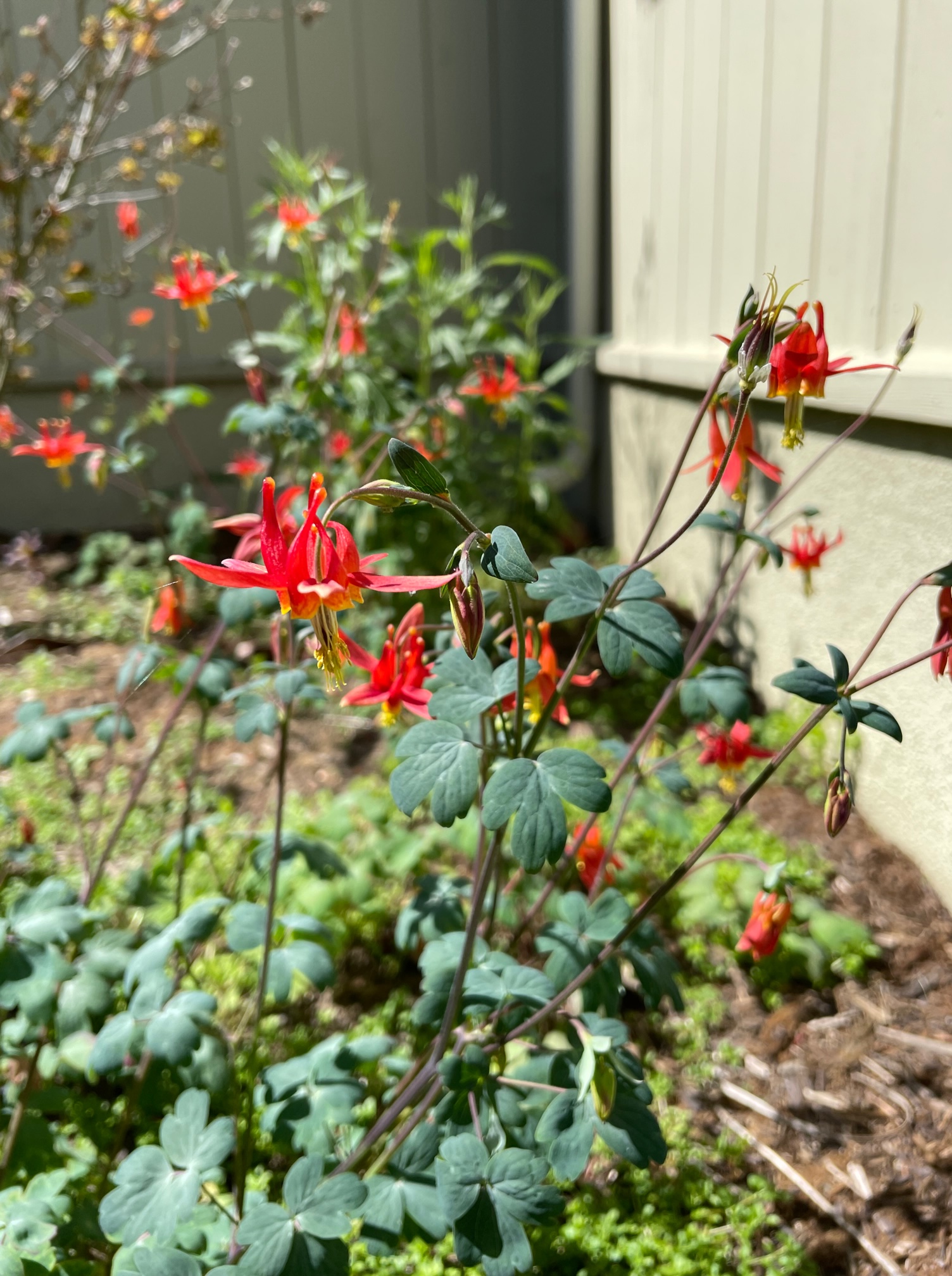
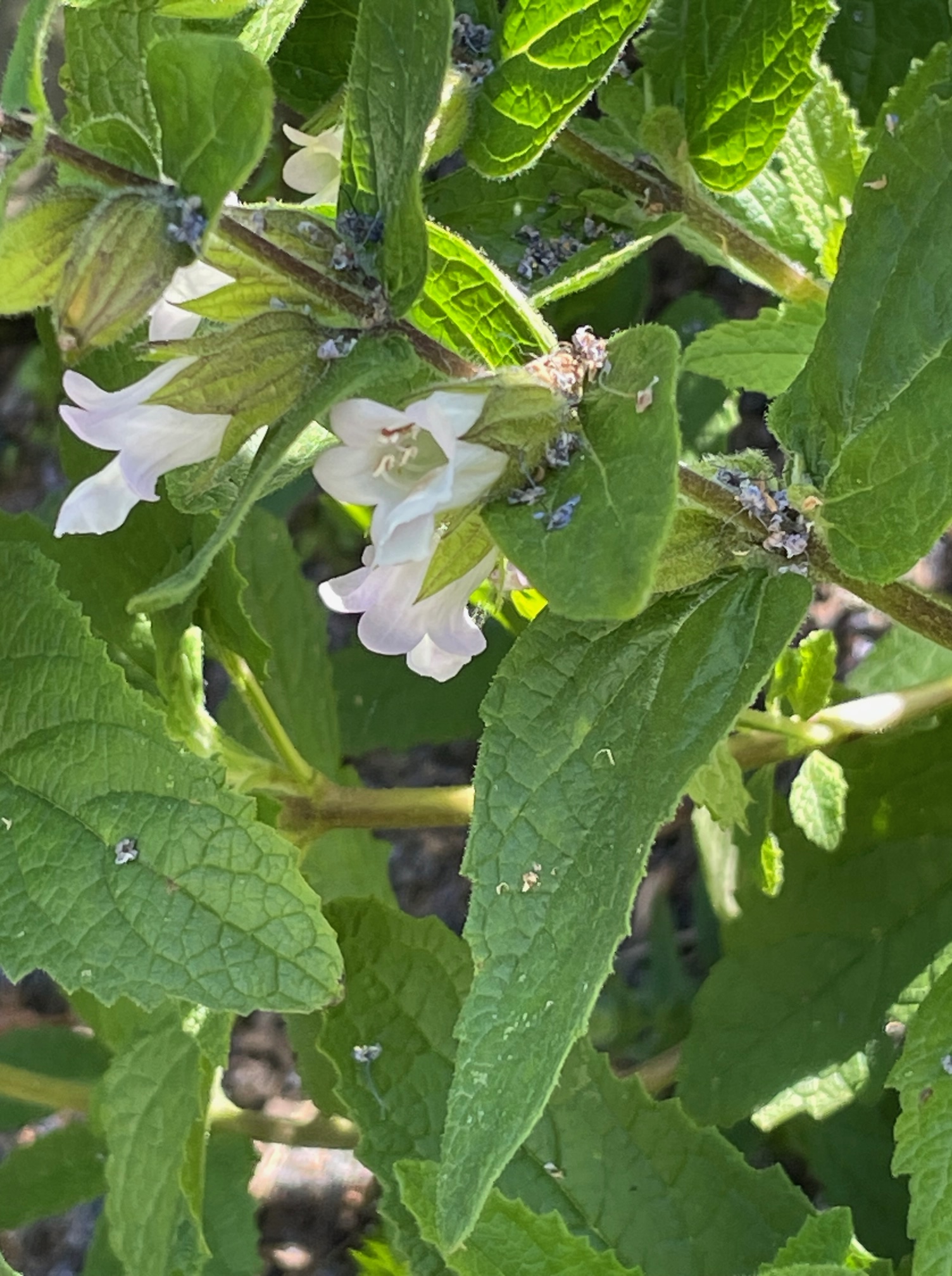
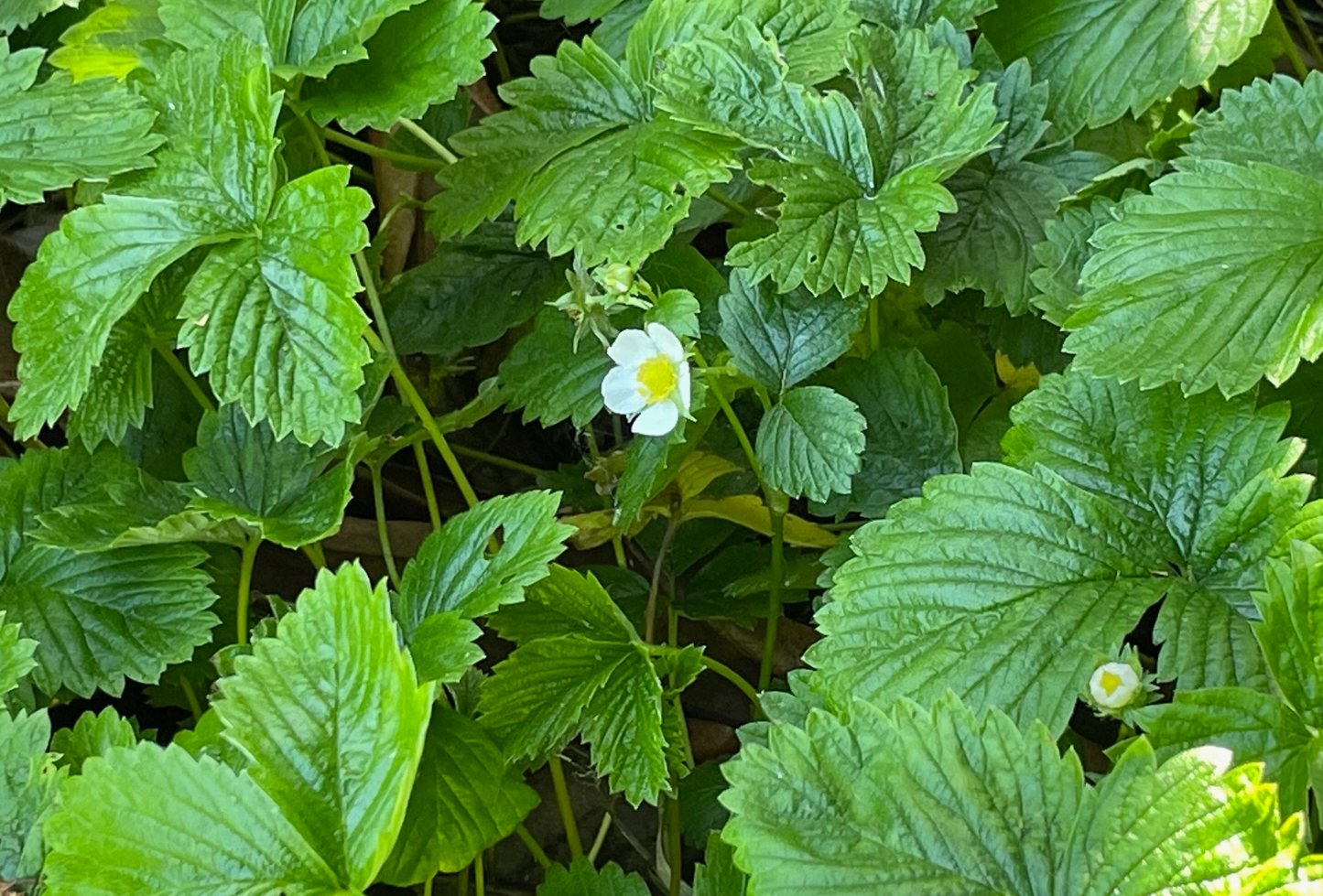
Below are photos of how some of the native plants in my garden look on these days coming up to Earth Day.
I’m on my tenth year of writing poems every day in February—except that in 2016 I wrote a poem every other day, so really it’s the ninth year of poems every day, and the tenth year of February poems.
Here’s a sampling of a few so far this month, and a bit about how they came to be.
lost and found
spider’s sticky net’s gone missing from shed’s shingles next to the plum tree
On February 3, I was having a busy day and thought I’d keep the task compact with a haiku. I also wanted to write about my husband’s wonderful discovery of a hummingbird nest in the tree outside our living room window. A short poetry form, and especially one that tends to be about nature, was fitting for the topic. What I wanted to say didn’t quite fit into a haiku, but worked well as a tanka (5-7-5-7-7 syllables).
All the characters in the “Lost and Found” poem are in this photo. Look for the hummingbird toward the right, equidistant from the top and bottom. The bird is blurry, which I think is a fine way for a hummingbird to appear.
Variations on a Bumper Sticker
PLEASE BE PATIENT STUDENT DRIVER
Please be patient, student driver.
Please be a student of a patient driver.
Pleas: Be a student; Be a patient driver.
Please have patience with students and drivers.
Please be a student of patience, drivers.
Please have patience with patients, students, and drivers.
Please realize some patients are students and drivers.
On February 12, I was taking a walk with my dog. This is prime poem development time for me. The “PLEASE BE PATIENT / STUDENT DRIVER” bumper sticker caught my eye. I liked the idea of switching the two main words to create “Please be a student of a patient driver” (the second variation in the final poem). I struggled on and off all day trying to write a poem about that idea, and then came to realize there were many more variations, and a list poem was much more interesting and illustrated the idea better. Another time that I am reminded to show, don’t tell.
Daniel Ari has been writing a limerick every day based on the previous day’s Wordle over on Facebook for months. You can peruse this very entertaining endeavor here. I recommend it highly with a caveat to my children’s book crowd that many of the poems are of a PG-13 nature. Daniel occasionally varies the limerick form by adding more pairs of the shorter lines. He coined the excellent term “limeriff.” I’ve been wanting to try one and, on February 15, found a topic that fit.
It’s Poetry Friday. Enjoy many more Friday poems, by visiting this week’s Poetry Friday Roundup at Molly Hogan’s Nix the Comfort Zone. Molly is in Maine, where the trees are in a different stage from our plum here in California. Her poem and photos remind me of the beauty and strength of trees in snow. Thank you, Molly!
Today is the first January 27 in 93 years without my cousin Ira, zikhroyne-livrokhe (may his memory be a blessing). On January 27, 2006, on his 76th birthday, the United Nations held the first designated International Holocaust Remembrance Day, to remember the millions of lives lost in the Holocaust and encourage education to help prevent future genocide. That day was also the 61st anniversary of the liberation of the Auschwitz-Birkenau concentration camps.
Ira was not a Holocaust survivor, he was born and lived in the US, but he was my last living relative who had physically been with members of our family who were murdered in the Holocaust. His parents and he traveled by boat in 1932-33 to what was then Poland and is now Ukraine to visit his father’s family. Here is a picture taken during that trip of Ira with his parents (at left) and with his grandfather and step-grandmother, and some of his aunts, uncles, and cousins.
By the end of that trip, Ira’s father wanted to stay in Europe. It’s easy to imagine how being reunited with his family of origin would leave him yearning to do so. He was visiting them for the first time since he’d immigrated to the United States in his early 20s, eleven years before. But Ira’s mother could see that the situation was not good for them in Europe and convinced her husband to return to New York—a decision that most likely saved their lives. Not many years later when some of these same relatives tried to get papers to emigrate, they could not. To my knowledge none of the other people in this photo survived the war, but it is my hope that maybe some of the younger children did and didn’t remember their family’s names to get in touch.
When I think of the importance of remembering the Holocaust in recent years, I’m acutely aware that the last of the Holocaust survivors and witnesses to the Holocaust are in very old age. I wonder and worry about how that will impact our global memory of this horrific act of genocide and our vigilance to prevent both antisemitism and any kind of genocide. There was a powerful connection in knowing that, even though it was before his memory, the cousin I chatted with about family history and the current state of the world, among other things, had been present in an area where parts of my family had lived for generations, but where their culture is now erased.
Ira was also one of my few remaining family members who spoke Yiddish, a language I’ve dearly loved learning over the past few years. I was beginning to be able to speak with him a bit in Yiddish, and he liked sharing favorite words and phrases with me and seeing what I knew. I was always trying to discern more about his accent. I miss those conversations and that vital connection to the language of our ancestors.
Ira valued the perpetuation and vitality of Jewish culture and Yiddish language, and became a donor to the Yiddish Book Center in Amherst, Massachusetts. One of many ways to honor this day is to visit their website and see what you discover: https://www.yiddishbookcenter.org/.
On this day, I think of the importance of remembering—remembering history and remembering loved ones. And I am glad we have many resources to help us remember.
Happy Multicultural Children’s Book Day (MCBD) 2023! Use the #ReadYourWorld hashtag today and every day to find books that give more children opportunities to see people and characters like themselves and give everyone opportunities to see the rich and true diversity of people in our world.
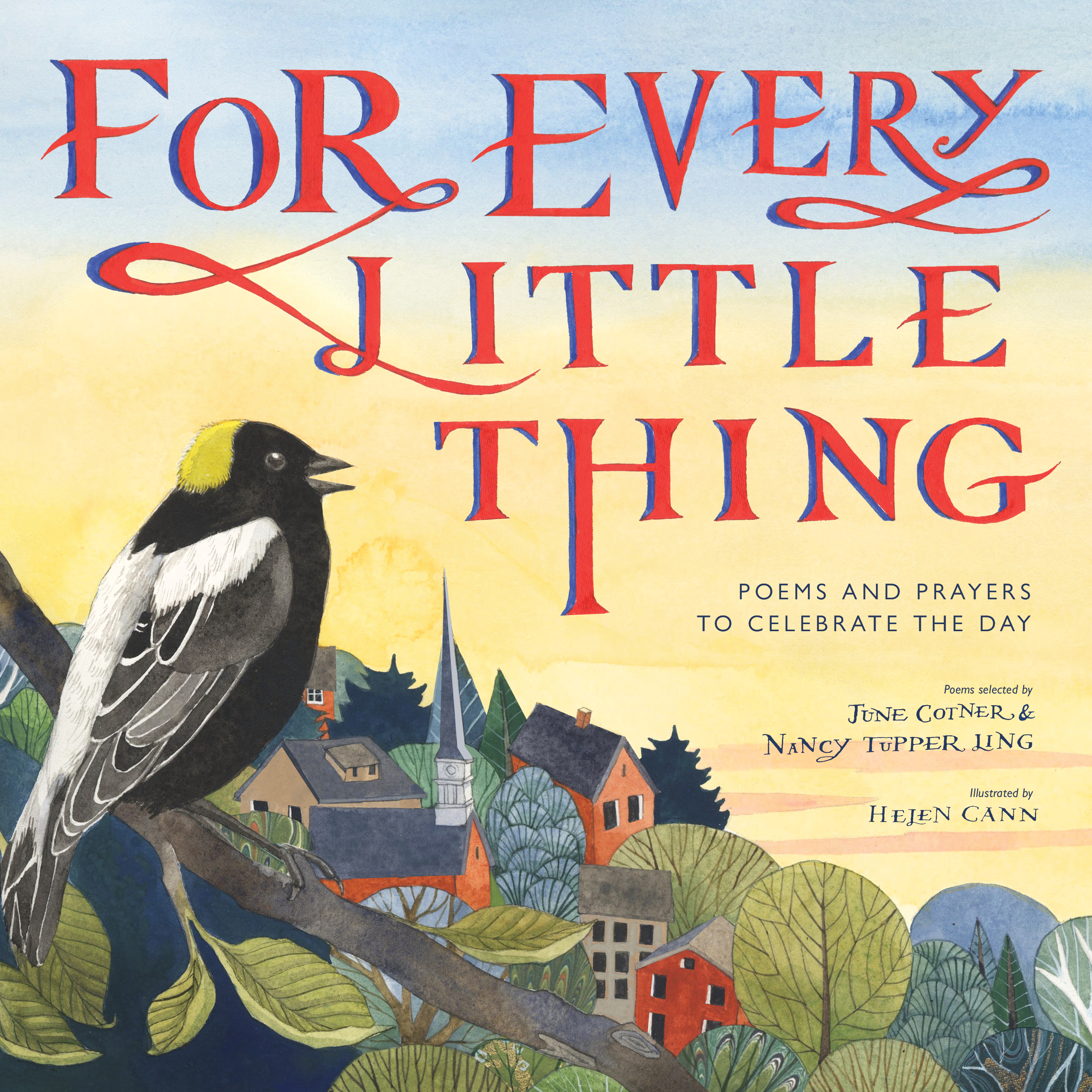
This year I am grateful to Nancy Tupper Ling for sending me a review copy of For Every Little Thing: Poems and Prayers to Celebrate the Day. This picture-book format collection of poems, selected by June Cotner and Nancy Tupper Ling and illustrated by Helen Cann, is a Junior Library Guild selection.
For Every Little Thing cover image
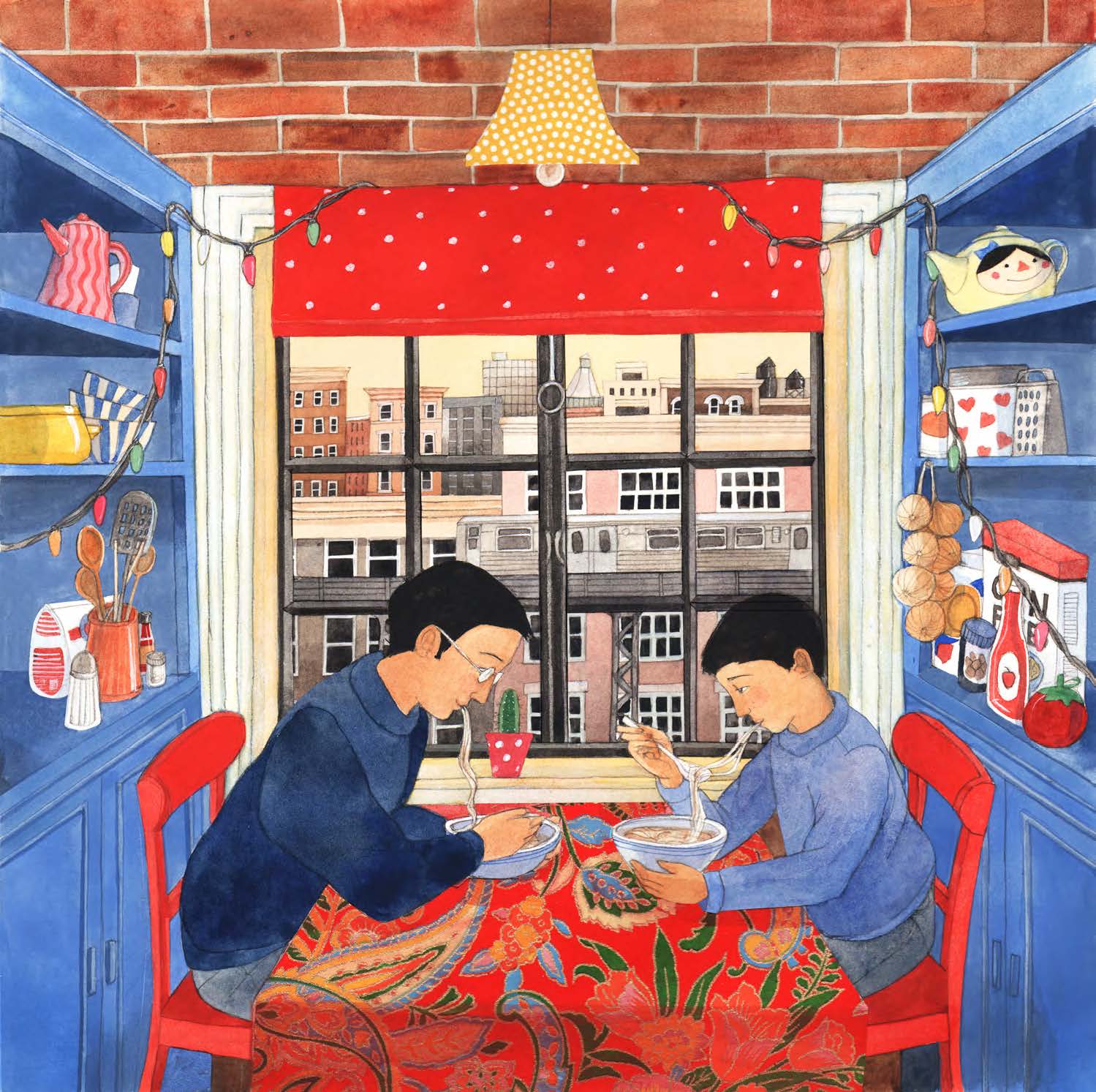
For Every Little Thing is filled with evoking details of life— “tiny shells,” “the soft purr of a sleeping kitten,” “noodly soup,” ”the playful sounds of day.” And through those details, the collection speaks of larger themes: wonder, gratitude, connection, family, spirit. Its verses use of the word “God,” but the collection is not strongly tied to any particular spiritual practice.
illustration that accompanies “Hearts in My Pocket,” For Every Little Thing, p. 53
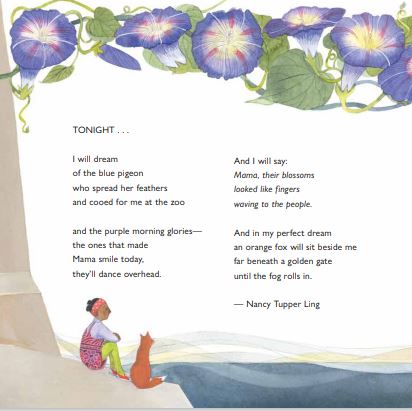
The styles of poetry and the poets themselves further depict our varied and wondrous world. The authors of the poems range from people who lived long ago, like Emily Dickinson and Helen Keller, to modern poets, including an eight-year poet, and spiritual leaders like Amma and Rabbi Rami Shapiro. The poems are short and long, rhyming and not-rhyming, structured and free verse. They are filled with moments that make the reader (or at least this one) pause in awe or contemplation and feel the relaxation and opening that comes with that.
“Tonight…” poem and illustration (half spread), For Every Little Thing, p. 78
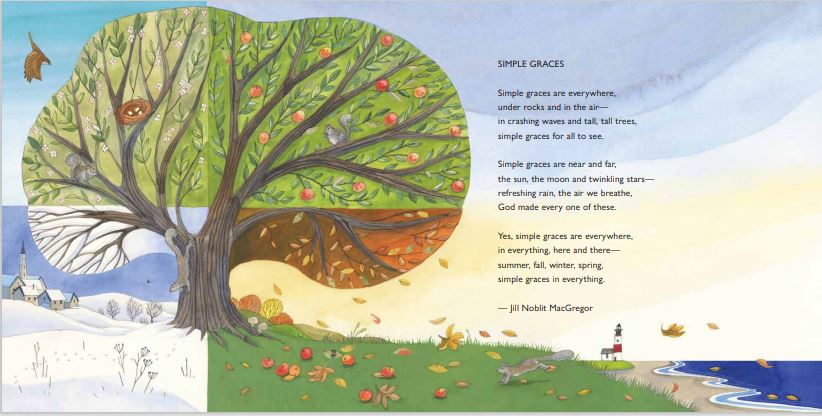
Helen Cann’s artwork is both rich with details and leaves plenty of white space. This works perfectly with the poetry to provide space to focus and notice the big feelings that small details can bring. The diverse aspect of this book depicted in the images is more through visible race than through clothing and customs.
“Simple Graces” poem and illustration (full spread), For Every Little Thing, pp. 43–44
For Every Little Thing is the kind of book that has fed my lifelong love of picture books. It feels solid in my hands. Every spread has visual and verbal delights. It is fun both to open at random and to read in order and experience its structure. The poems are organized around themes such as “Morning,” “Love and Kindness,” “Family and Friends,” “Nightfall,” and “Dreams.”
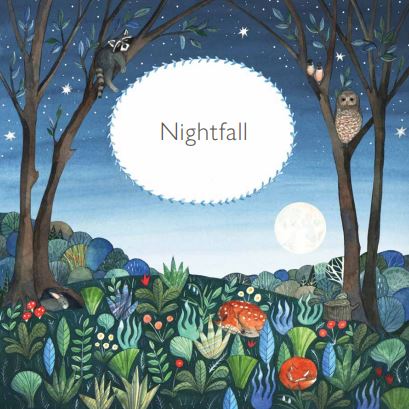
Nightfall section opening, For Every Little Thing, p. 59
The “Nightfall” and “Dreams” sections could be used by families to choose poems or prayers for bedtime rituals. The entire book is a plentiful resource for youth spiritual educators.
I was struck as I spent time with the book and read its introduction that its aim is very similar to that of My Amazing Day, the board book I wrote in partnership with photographer Lori A. Cheung and designer Elizabeth Iwamiya. Both center on noticing the wonder in everyday things and becoming conscious of that wonder through language, which leads to gratitude. Though My Amazing Day is secular, much more brief, and for a younger audience. For Every Little Thing strikes me as a perfect book for older children in families who love My Amazing Day and for whom the word “God” is part of their spirituality.
Wishing you many wonder-full discoveries on MCBD and always!
====
Multicultural Children’s Book Day 2023 (1/26/22) is celebrating its 10th year! This non-profit children’s literacy initiative was founded by Valarie Budayr and Mia Wenjen; two diverse book-loving moms who saw a need to shine the spotlight on all of the multicultural books and authors on the market while also working to get those books into the hands of young readers and educators.
Ten years in, MCBD’s mission is to raise awareness of the ongoing need to include kids’ books that celebrate diversity in homes and school bookshelves continues. Read about our Mission & History HERE.
MCBD 2023 is honored to be Supported by these Medallion Sponsors!
Join us on Thursday, January 26, 2023, at 9 pm EST for the 10th annual Multicultural Children’s Book Day Read Your World Virtual Party!
This epically fun and fast-paced hour includes multicultural book discussions, addressing timely issues, diverse book recommendations, & reading ideas.
We will be giving away a 10-Book Bundle during the virtual party plus Bonus Prizes as well! *** US and Global participants welcome. **
Follow the hashtag #ReadYourWorld to join the conversation, and connect with like-minded parts, authors, publishers, educators, organizations, and librarians. We look forward to seeing you all on January 26, 2023, at our virtual party!
I'm Karin Fisher-Golton. I love the water and my family and friends—this photo reminds me of both. I write picture books, poetry, early readers, middle grade novels, and nonfiction for children. I also edit children's books (picture books through young adult books). Click on my photo above for more about me.










 Karin Fisher-Golton